

How to build a ride-hailing app: matching, live tracking and the parts people underestimate
A ride-hailing app is a real-time matching system with a map on top. The map is the easy part. Matching, trip state and trust are where the engineering goes.
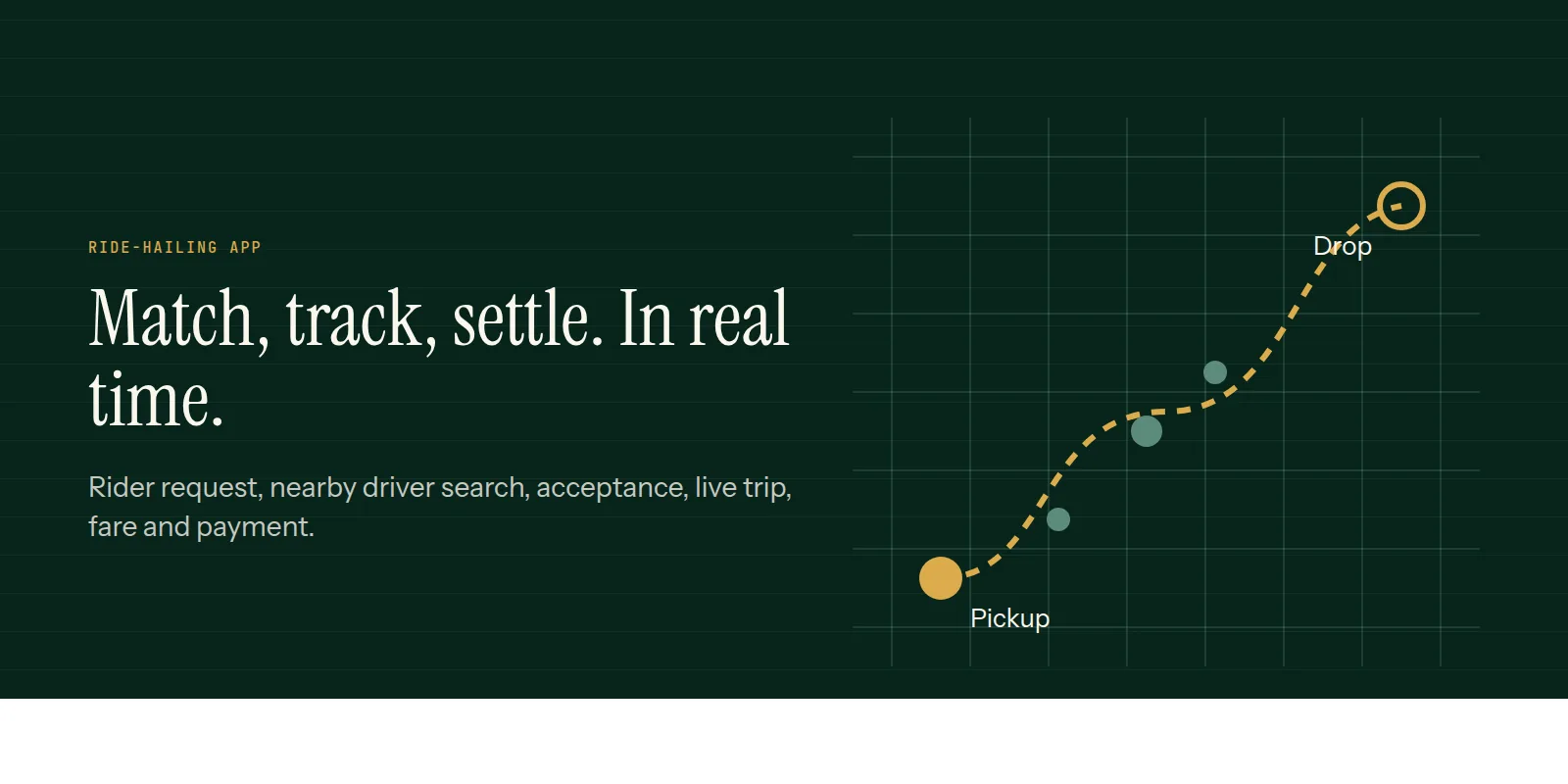
A ride-hailing app looks like two buttons and a map. Underneath is a system that must find a driver in seconds, keep two phones agreeing about one trip, and settle a fare fairly.
The three parts
- Rider app: set pickup and drop, see an estimate, request, track the driver, pay, rate.
- Driver app: go online, receive a request, accept, navigate, start and end the trip.
- Admin panel: drivers and documents, pricing rules, trips, refunds and support.
Matching nearby drivers
Drivers send their location every few seconds. The server stores the latest position in a geospatial index, then queries it for available drivers near the pickup. Offer the request to the nearest one, wait a short time, and move to the next if there is no reply.
Keep the first version simple: nearest available driver, one offer at a time. Clever matching can wait until you have real trips to learn from.
Trips are a state machine
textrequested -> offered -> accepted -> arrived
          -> started -> completed -> paid
any state before started -> cancelled (with a reason)
Decide who can move a trip between which states, and make the server the only authority. Most live bugs are the rider and driver apps disagreeing about the state.
Details people underestimate
- Battery and data use from constant location updates. Choose intervals deliberately.
- Poor signal. Queue updates and recover cleanly when the connection returns.
- Trust and safety: driver verification, trip sharing, an emergency option and reporting.
- Fare rules: base, distance, time, waiting and cancellation, written down before building.
- Payments and payouts handled by an established provider.
A realistic MVP
One city, a small group of verified drivers, nearest-driver matching, cash or one online payment method, and an admin panel that lets you intervene by hand. Prove the loop works before adding scheduling, pooling or promotions.
Our mobile app development and custom software pages describe how we scope real-time, multi-role products like this.
Common questions
- What apps make up a ride-hailing service?
- A rider app, a driver app and an admin panel, all backed by one API that handles matching, trips, fares and payments.
- How are nearby drivers found?
- The server keeps recent driver locations in a geospatial index and queries it for the nearest available drivers to a pickup point.
- Do I need licences to run a ride-hailing service in India?
- Rules for aggregators vary by state and change over time. Get current legal advice for the region you plan to operate in before launch.
This is what we do
Work of this kind is Mobile App Development and Custom Software — the same hands that wrote this.
A guide from the team at RiverPoint Web & App. It describes how we would approach this and makes no measurement claims. If you want to talk it through, get in touch.