Native, React Native or Flutter: how to pick for your first app
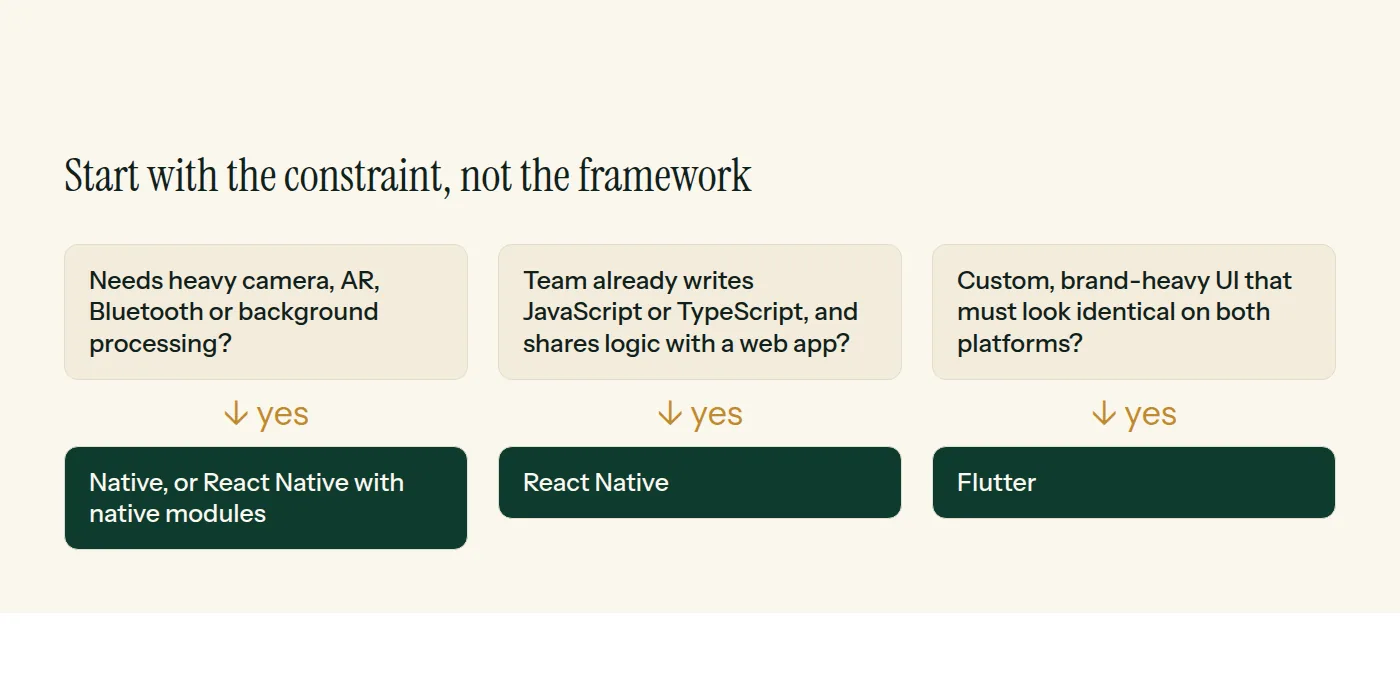
The framework argument is usually the wrong one to have first. Three questions about the product settle most of it, and they are easier to answer than a benchmark.
Most conversations about app frameworks start with performance charts and finish with a feeling. That order is backwards. The choice is mostly decided by three facts about your product, and none of them is a benchmark.
This guide is a way of reasoning, not a ranking. We are not claiming any measured speed difference here, because for the screens most business apps ship, the framework is rarely what the user feels.
Question one: how deep does the app go into the device?
Camera filters, augmented reality, Bluetooth peripherals, background location, and audio processing push you toward native code, or toward React Native or Flutter with native modules for those parts. Forms, lists, maps, payments, notifications and login do not. They work well in all three.
If the device feature is the product, price in native work from day one. If it is a side feature, a cross-platform framework plus a small native module usually covers it.
Question two: who will build and maintain it?
Team skill matters more than framework merit. A web team that already writes TypeScript will reach a working app sooner in React Native, and can share validation, API clients and types with the website. A team starting from nothing has a cleaner choice between the three.
Also ask who maintains it in two years. A smaller hiring pool is a real cost, even when the framework is excellent.
Question three: how custom is the design?
React Native renders real platform components, so the app feels like each operating system by default. Flutter draws its own interface, which makes a heavily branded design look the same on both platforms with less effort. Neither is the better outcome. It depends on whether you want to match the platform or override it.
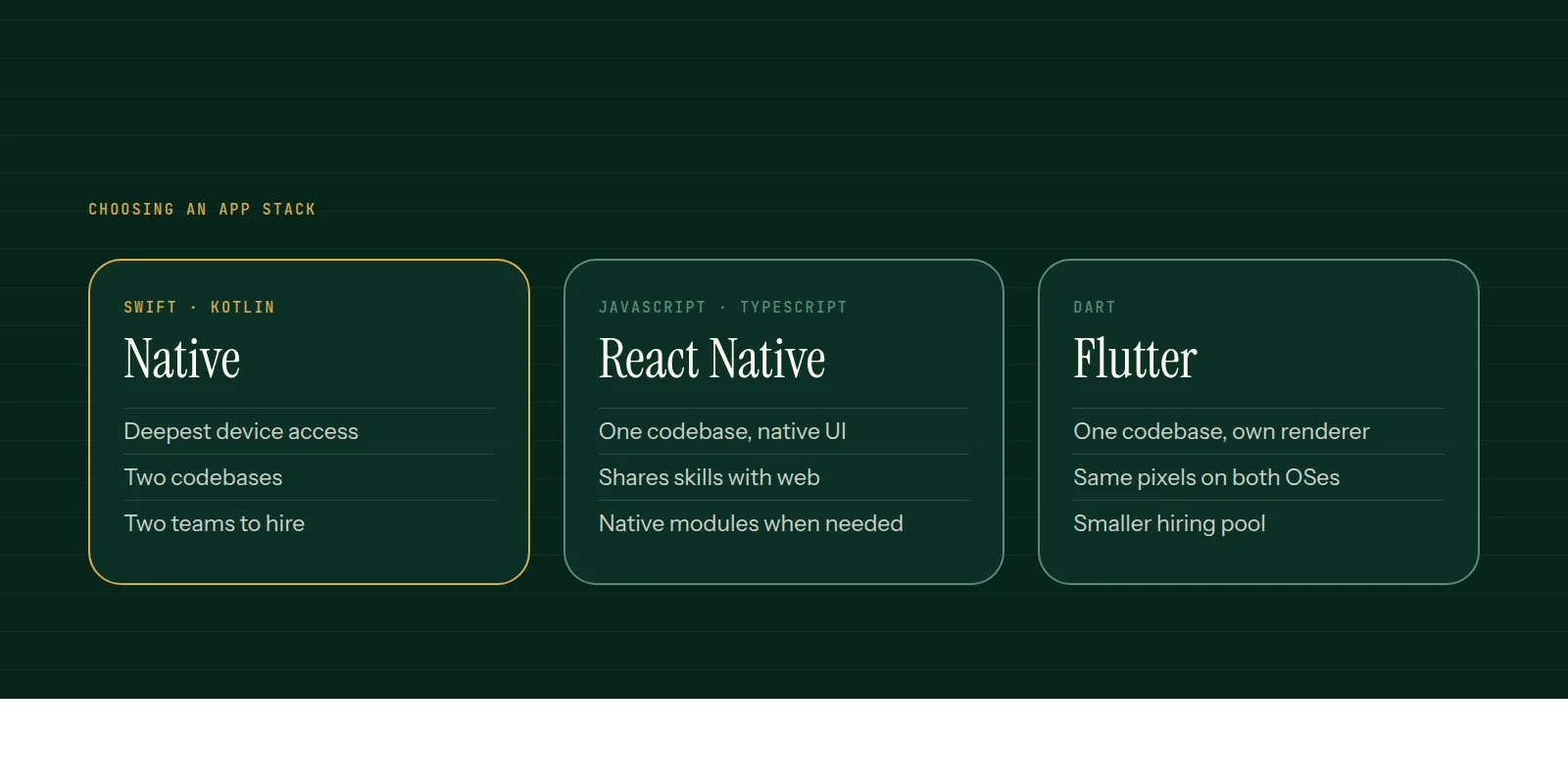
| Native | React Native | Flutter | |
|---|---|---|---|
| Codebases for iOS and Android | Two | One, with native modules where needed | One |
| Look and feel | Fully platform | Platform components by default | Own renderer, identical everywhere |
| Best fit | Device-heavy products | Teams already on JavaScript or TypeScript | Design-led, custom interfaces |
| Main cost | Two teams or two skill sets | Native module work for edge cases | Smaller hiring pool, Dart |
What we would do for a typical business app
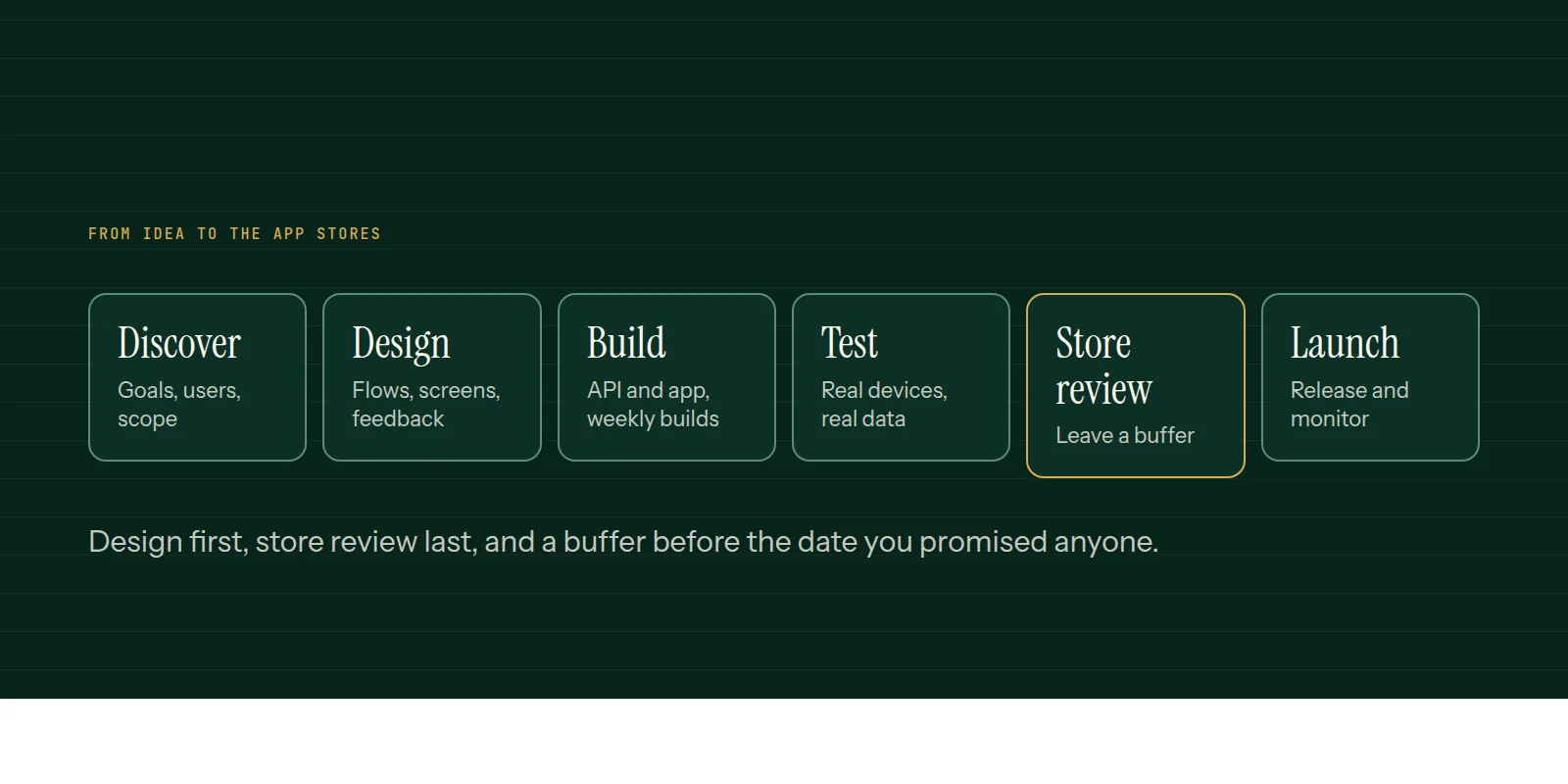
For a booking, ordering, loyalty or internal-tools app, a single codebase is almost always the better first release. You learn faster, you spend less, and you can move the one screen that needs it to native later.
- Keep business rules in your API, not in the app, so the front end can change.
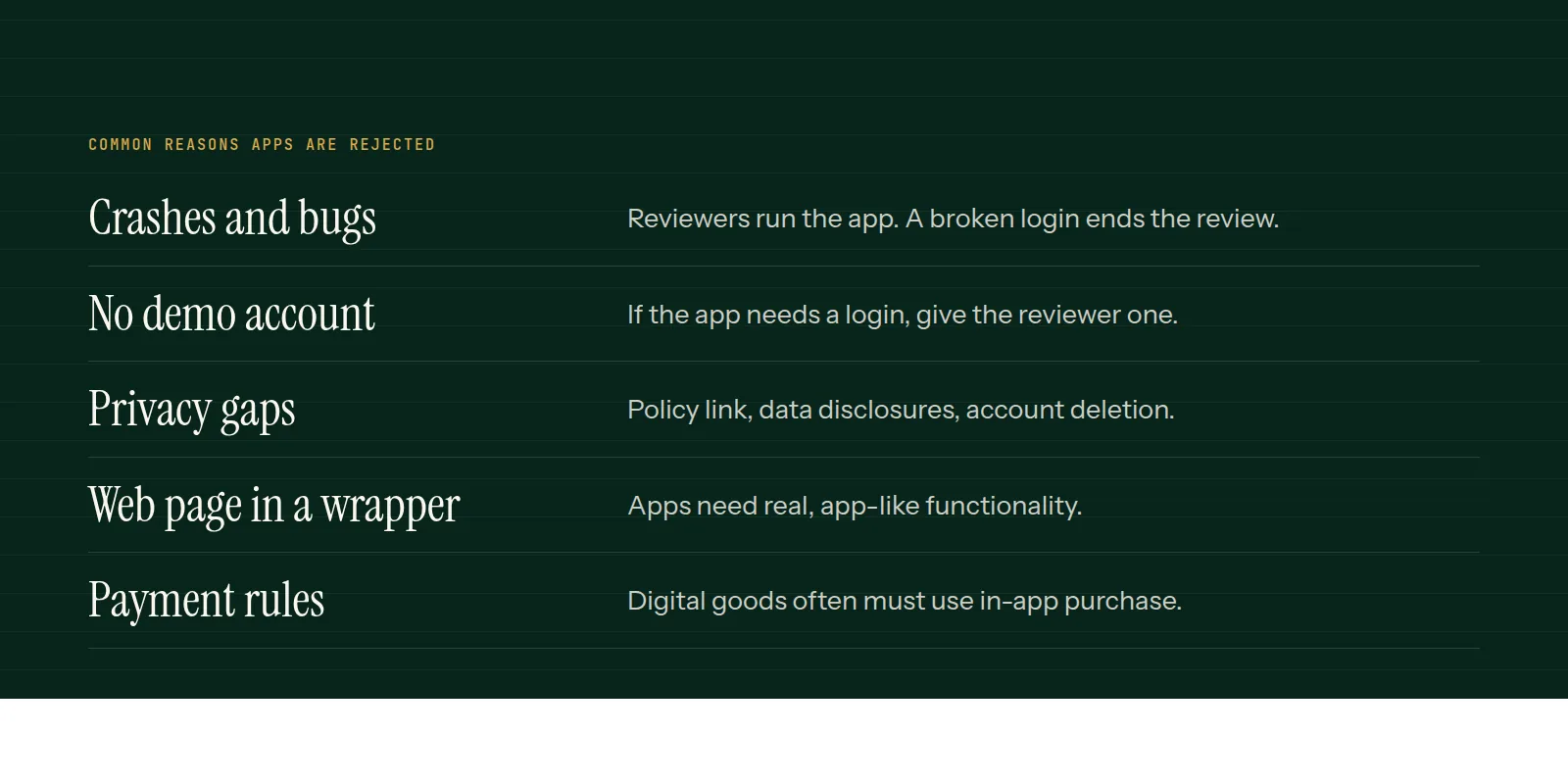
- Plan app store accounts, review times and privacy labels before the build, not after.
- Test on one older Android phone as well as a new iPhone. Most surprises live there.
- Release a small first version to real users before adding features.
If you are weighing this for a real project, our mobile app development and MVP pages describe how we scope the first release.
Common questions
- Is Flutter or React Native better for a startup app?
- Neither wins in general. React Native suits teams that already write JavaScript or TypeScript and may share logic with a web app. Flutter suits products that need one tightly controlled design on both platforms.
- When should an app be fully native?
- When the core of the product depends on deep device features such as advanced camera work, AR, heavy background processing or platform-specific hardware, and you can fund two codebases.
- Can you switch from React Native to native later?
- Yes, but it is a rewrite of the app layer. Keep business logic and your API separate from the screens so the cost of switching stays small.
This is what we do
Work of this kind is Mobile App Development and MVP Development — the same hands that wrote this.
A guide from the team at RiverPoint Web & App. It describes how we would approach this and makes no measurement claims. If you want to talk it through, get in touch.