

How long does it take to build a mobile app? The stages, and what stretches them
Anyone who quotes a number before asking what the app does is guessing. Here are the stages, what each depends on, and where schedules usually slip.
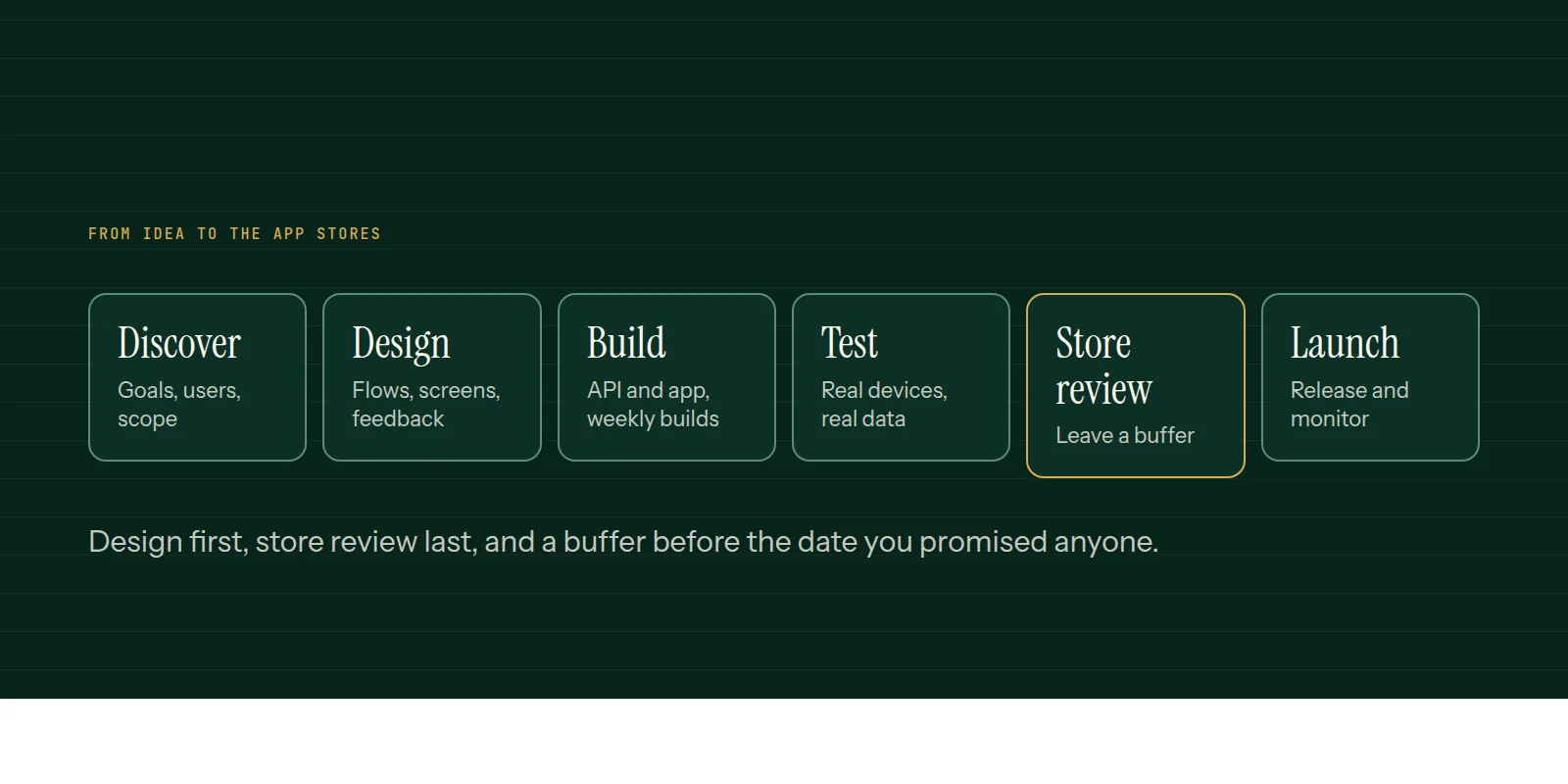
The honest answer to how long an app takes is that it depends on what it does. We will not give a number here because any single number would be invented. What we can describe is the shape of the work and what stretches each part.
Stage 1: discovery
Agree who the app is for, the one thing it must do well, and what is out of scope for the first release. This is short when decisions are made quickly and long when the people involved disagree. It is the cheapest place to save time later.
Stage 2: design
Flows first, then screens. Review on a phone, not a laptop. The main source of delay is feedback that arrives late or changes direction after screens are approved.
Stage 3: build
The app and the API behind it, delivered in small pieces you can open weekly. Time here is driven by the number of screens, the number of user roles, and integrations such as payments, maps, SMS or a third-party system.
Stage 4: test
On real devices, including an older Android phone, on a weak connection, with realistic data. Testing finds the problems that matter before your users do, and it takes longer when earlier stages were rushed.
Stage 5: store review
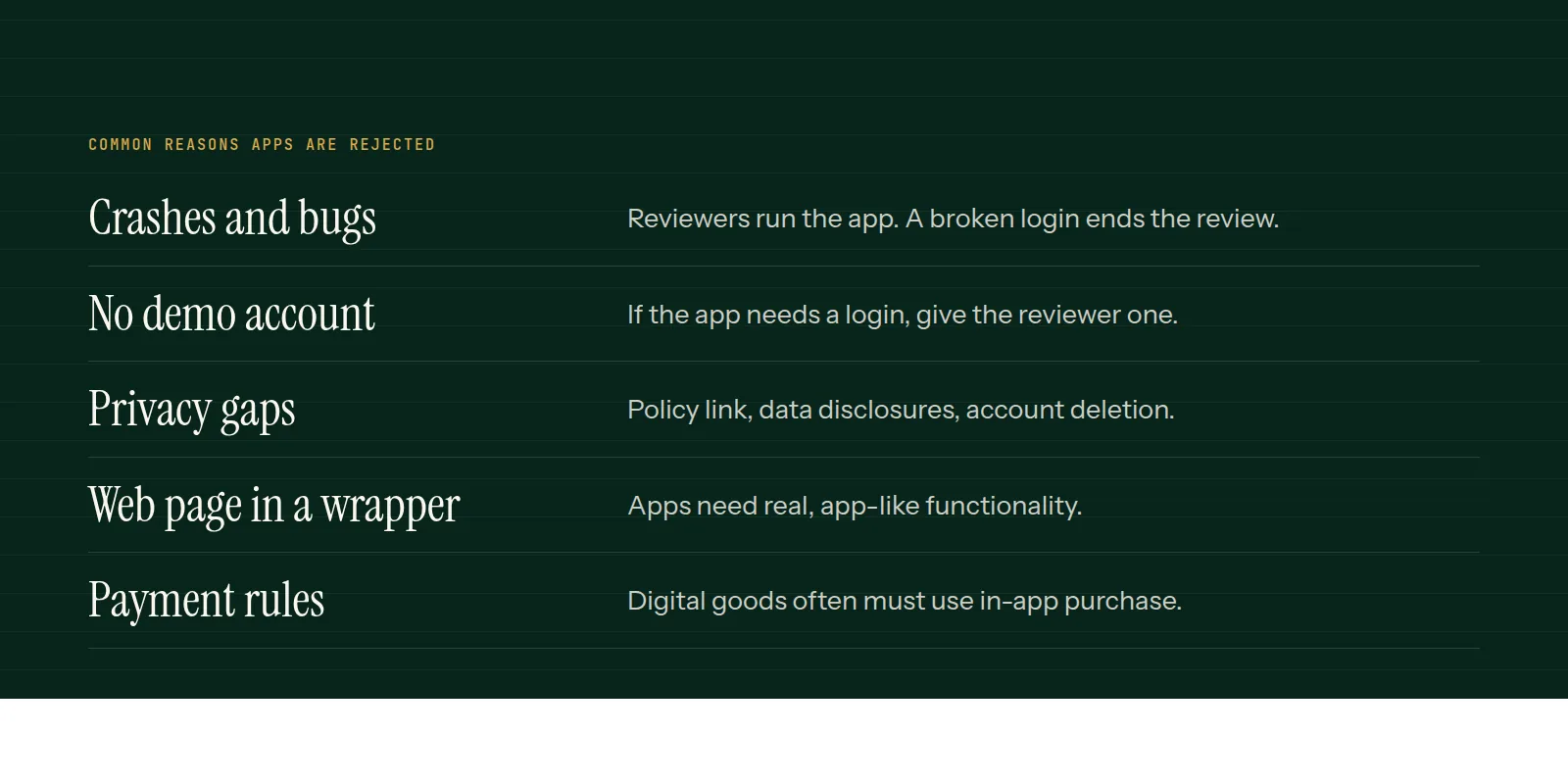
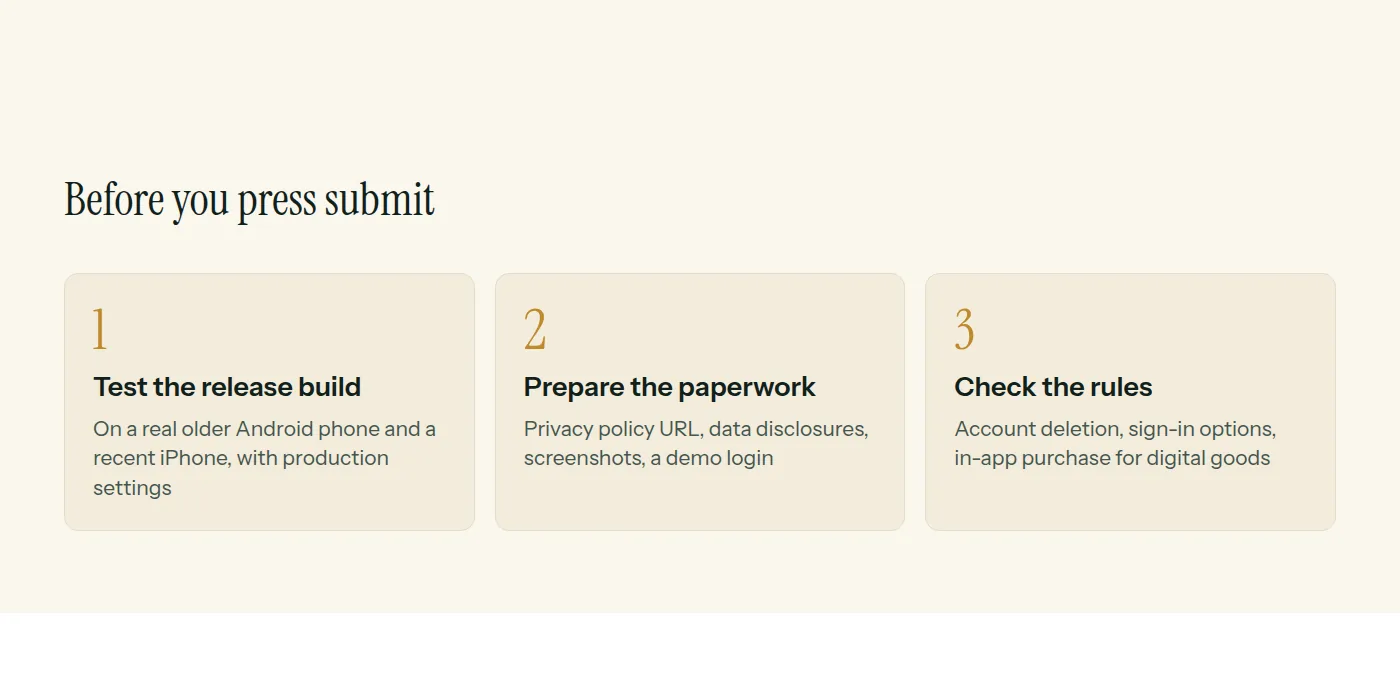
Both stores review apps before release. The time is outside anyone's control, and a rejection costs a round trip. Plan a buffer here rather than promising a launch date with no slack.
Stage 6: launch and the weeks after
Release, watch crash reports, and fix what real users find. Budget for this. An app that is launched and abandoned decays as operating systems change.
How to shorten the schedule honestly
- Cut scope, not testing. A smaller first release ships sooner and teaches you more.
- Decide quickly. One person who can approve designs saves days.
- Start store accounts and legal pages early. They have lead time of their own.
- Confirm every integration works in its test environment before building around it.
Our mobile app development and MVP pages describe how we scope a first release against a written plan.
Common questions
- Why do developers not give a fixed timeline immediately?
- Because scope drives time. Two apps with the same idea can differ hugely in screens, integrations and rules. A fair estimate follows a written scope.
- Does building for iOS and Android double the time?
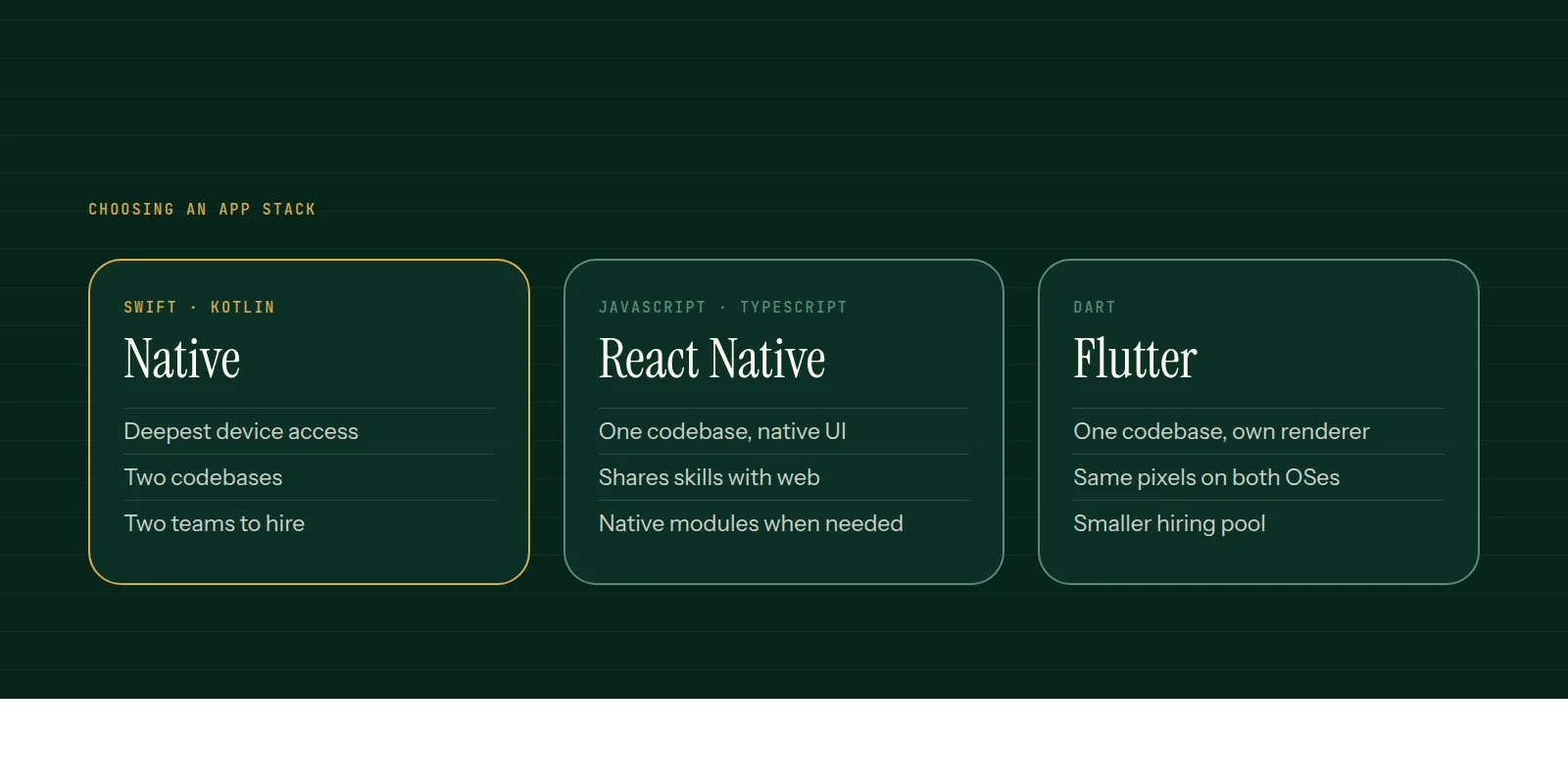
- Not with a cross-platform framework, which shares most of the code. It still adds testing, store setup and platform-specific fixes for each.
- What delays app launches most often?
- Changing requirements midway, late feedback, third-party integrations that behave differently than documented, and store review issues found at the end.
This is what we do
Work of this kind is Mobile App Development and MVP Development — the same hands that wrote this.
A guide from the team at RiverPoint Web & App. It describes how we would approach this and makes no measurement claims. If you want to talk it through, get in touch.