
How to choose a white-label development partner: nine checks before the first invoice
Most white-label arrangements go wrong in the same few places, and all of them can be checked before any money moves. Here is the list we would use if we were the ones buying.
Hiring a white-label partner is a trust decision made with very little evidence. You cannot see the team, you often cannot talk to the client, and the first sign of trouble arrives as a missed deadline your own client notices before you do.
The good news is that nearly every failure in this kind of arrangement can be tested for in advance. These are the nine checks, in the order we would run them.
Checks about the work
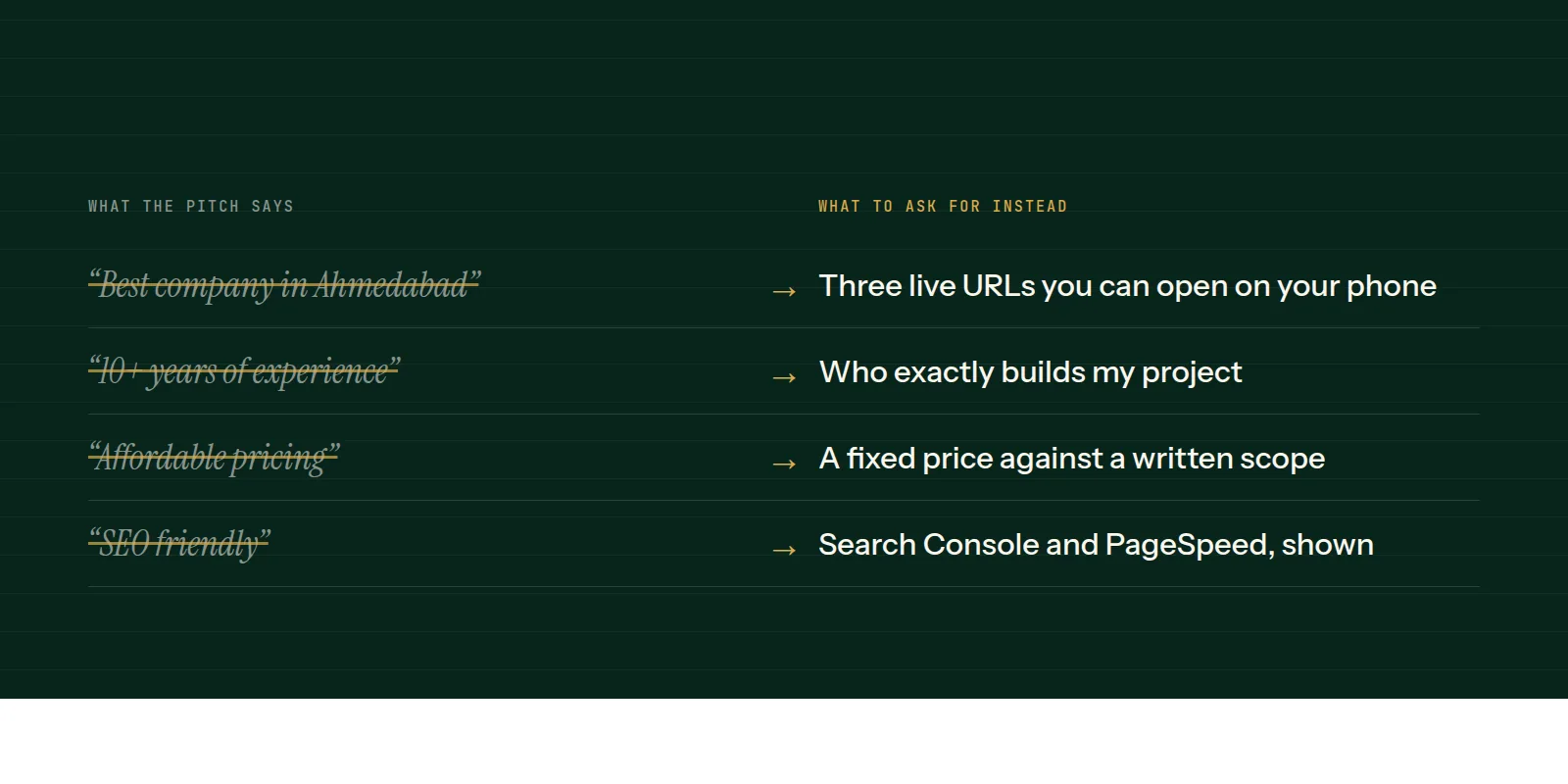
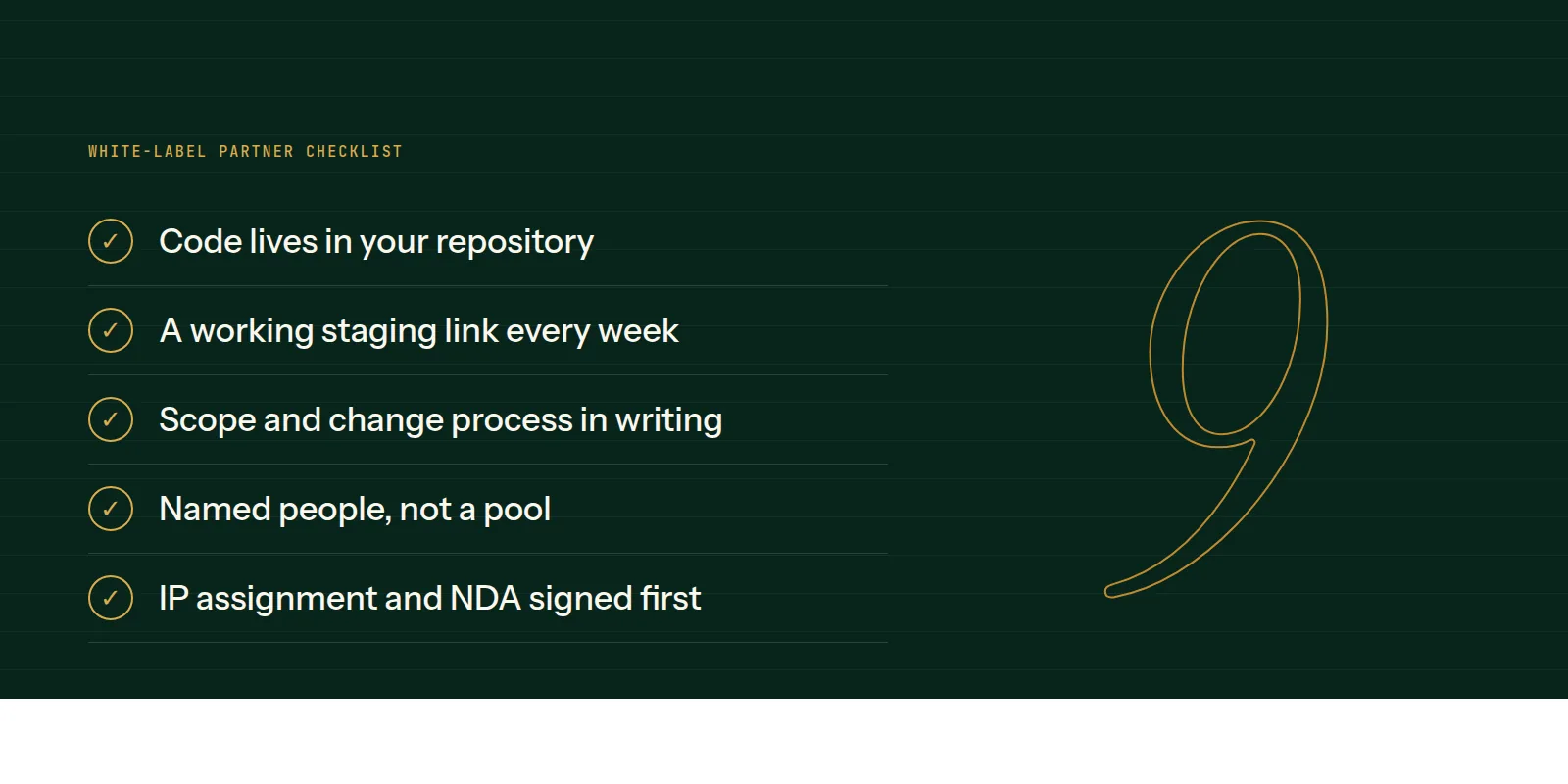
1. Ask to see two or three live sites they built, and open them on your phone. Not screenshots, not a case-study PDF. If the work only exists as images, you are being shown a design, not a build.
2. Ask who wrote each one. An agency that resells another studio's work will tell you quickly if you ask directly and accept the answer calmly.
3. Run those sites through PageSpeed Insights and read the mobile result. You are not looking for a perfect score. You are looking for whether anyone on that team treats speed as part of the job.
Checks about how they run a project
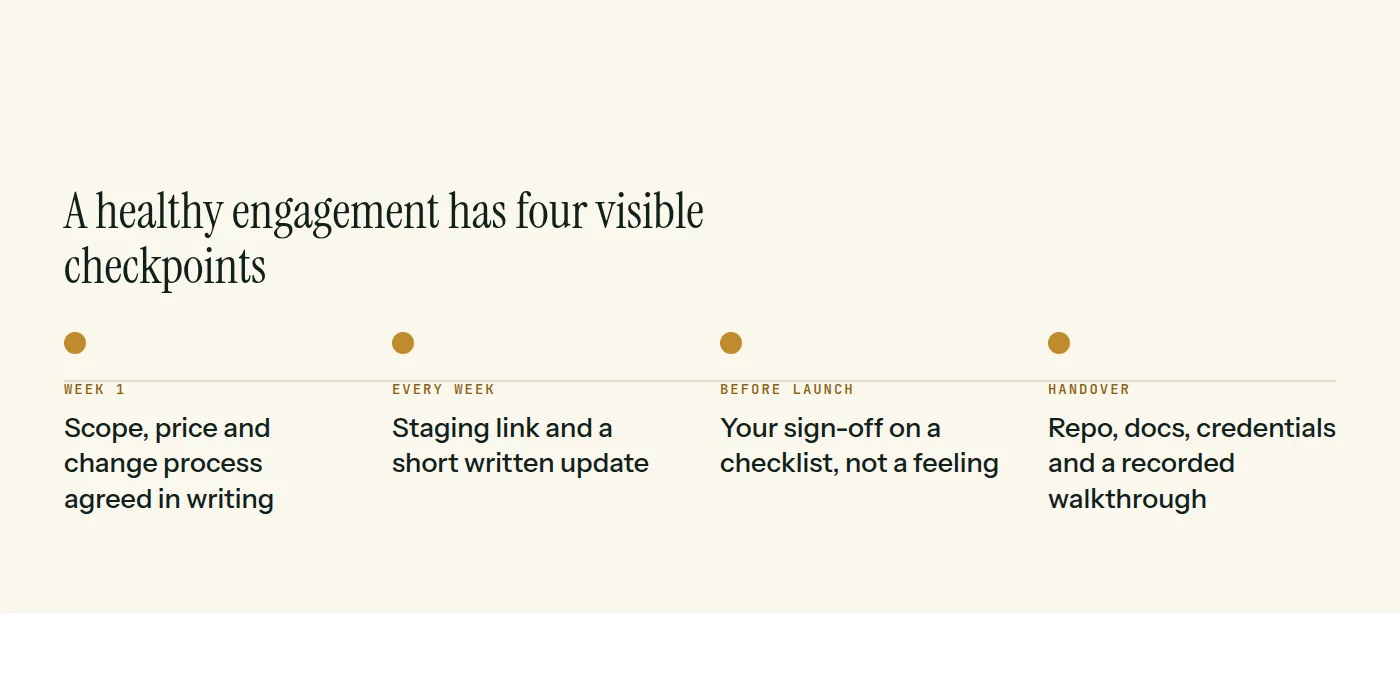
4. Ask for the scope and the change process in writing before work starts. Two things matter: what counts as a change, and what a change costs. Vague answers here become arguments later.
5. Ask what you will see each week. The right answer is a staging link you can open and a short written update. A weekly call with no working link is a status meeting about work you cannot verify.
6. Ask for the people by role. You do not need a team photo. You need to know who is the developer, who reviews the work, and who you message when something is wrong at 6pm.
Checks about what you own
7. The code should live in a repository you control, or one you are added to as owner on day one. If it lives only on their machines until final payment, you are renting access to your own project.
8. Get an NDA and an IP assignment signed before you send the first client detail. A reputable studio will have both ready and will not treat the request as an insult.
9. Agree the handover now. It should include the repository, environment variables and credentials in a form you can rotate, hosting access, and a recorded walkthrough of how to deploy. Writing it down at the start is far cheaper than negotiating it at the end.
Red flags that are easy to spot
- A fixed price quoted with no questions asked about the project.
- Reluctance to put your client's work in a repository you can see.
- Different people replying each time, with no named owner of the project.
- Staging links that appear only at the very end.
- Pressure to pay the full amount before any working build exists.
Start small, then scale
Whatever the partner says, begin with one small paid job: a landing page, a single feature, a bug-fix batch. Fix the price, fix the date, and treat it as an audition for the process as much as the code. The ones who pass it become easy to give larger work to.
We work with agencies this way ourselves, which is why the checklist above reads the way it does. If you want to see how our version of each step looks, the dedicated-team and fixed-scope pages describe it.
Common questions
- What is white-label web development?
- A development studio builds the website or app and you deliver it to your client under your own brand. Your client deals only with you, and the studio stays in the background.
- Should I ask a white-label partner for a paid test project?
- Yes, and keep it small: one page or one feature, with a fixed price and a one-week deadline. It shows you how they communicate, not just how they code.
- Who owns the code in a white-label project?
- You should, from the first commit. Ask for the work to live in a repository you control, and for a written IP assignment that takes effect on payment.
This is what we do
Work of this kind is Dedicated Team and Fixed-Scope Projects — the same hands that wrote this.
A guide from the team at RiverPoint Web & App. It describes how we would approach this and makes no measurement claims. If you want to talk it through, get in touch.