
Headless Shopify: when it pays off, and when a normal theme is the better call
Headless gives you full control of the storefront and takes on real cost. Four questions tell you which side of that line your store is on.
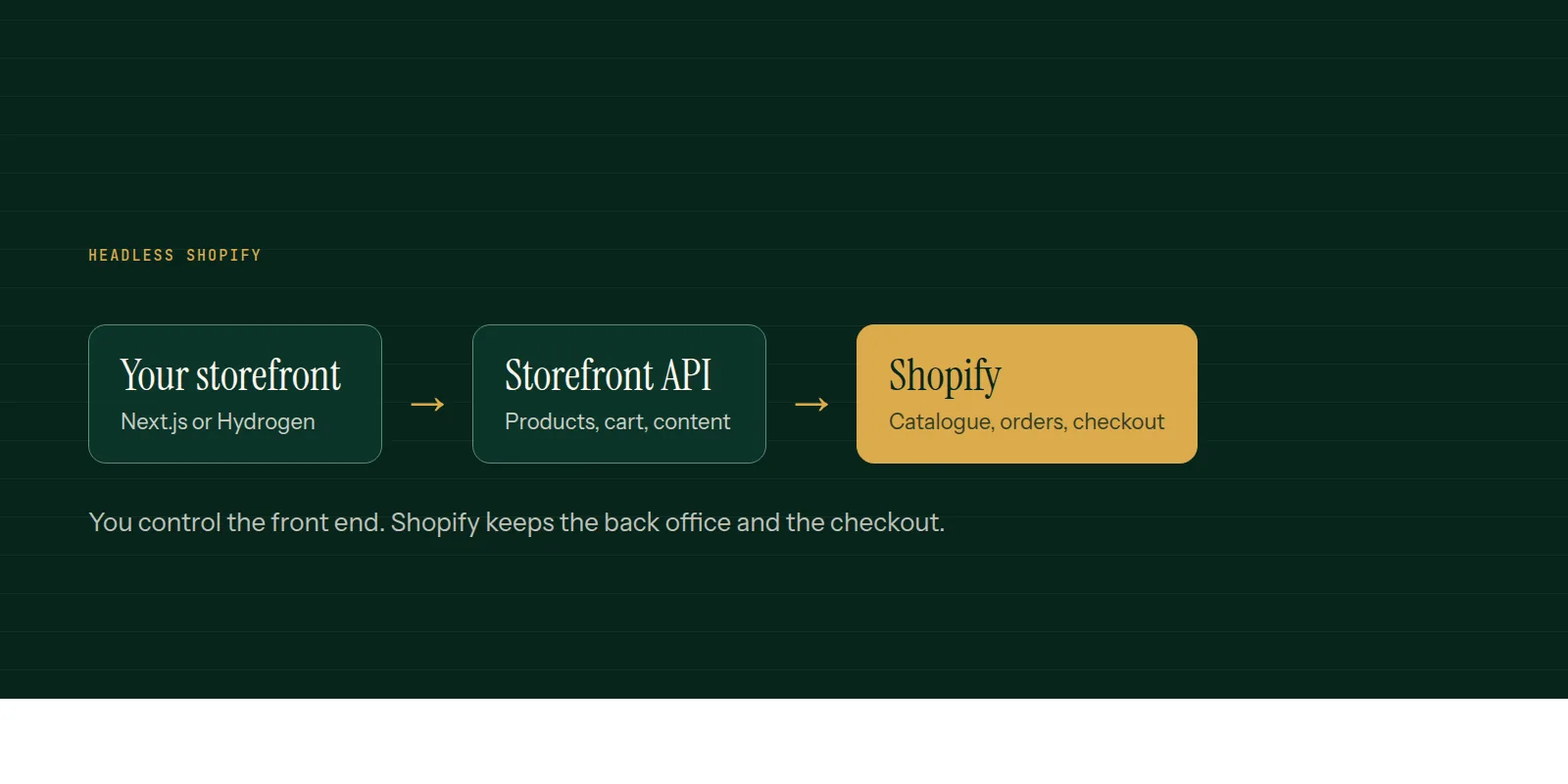
Headless Shopify is attractive because it promises freedom: any design, any interaction, any content model. It delivers that, and it also turns a configured product into a software project you now own.
This guide is about the decision, not the build. It makes no speed or conversion claims, because those depend entirely on the store.
What changes when you go headless
- Your storefront is your own code, hosted separately from Shopify.
- It reads products, collections and carts through the Storefront API.
- Checkout still happens on Shopify, which keeps payments simple and secure.
- Theme-based apps and theme editor changes no longer apply to the front end.
Four questions to ask first
Does your design need something a theme cannot do? Highly custom product pages, configurators, rich editorial content mixed with shopping, or unusual navigation are real reasons. A different colour scheme is not.
Do you have, or can you fund, ongoing development? A headless store needs someone to maintain and improve it. A theme largely maintains itself.
Do you depend on apps that live in the theme? List every app, then check how each one works without a theme.
Is page speed limited by the front end rather than the apps and images on it? Fixing a slow theme is often cheaper than replacing it.
When a theme is the better call
Most small and mid-sized stores. If your catalogue is simple, your team edits content in the theme editor, and your apps are theme-based, a well-built theme gets you live sooner, costs less, and leaves fewer things to break.
When headless is worth it
Large catalogues with custom merchandising, content-led brands that blend editorial and shopping, multi-region or multi-brand storefronts from one catalogue, and teams with developers who will own the front end.
Our e-commerce development page describes the options we scope for stores at each stage.
Common questions
- What is headless Shopify?
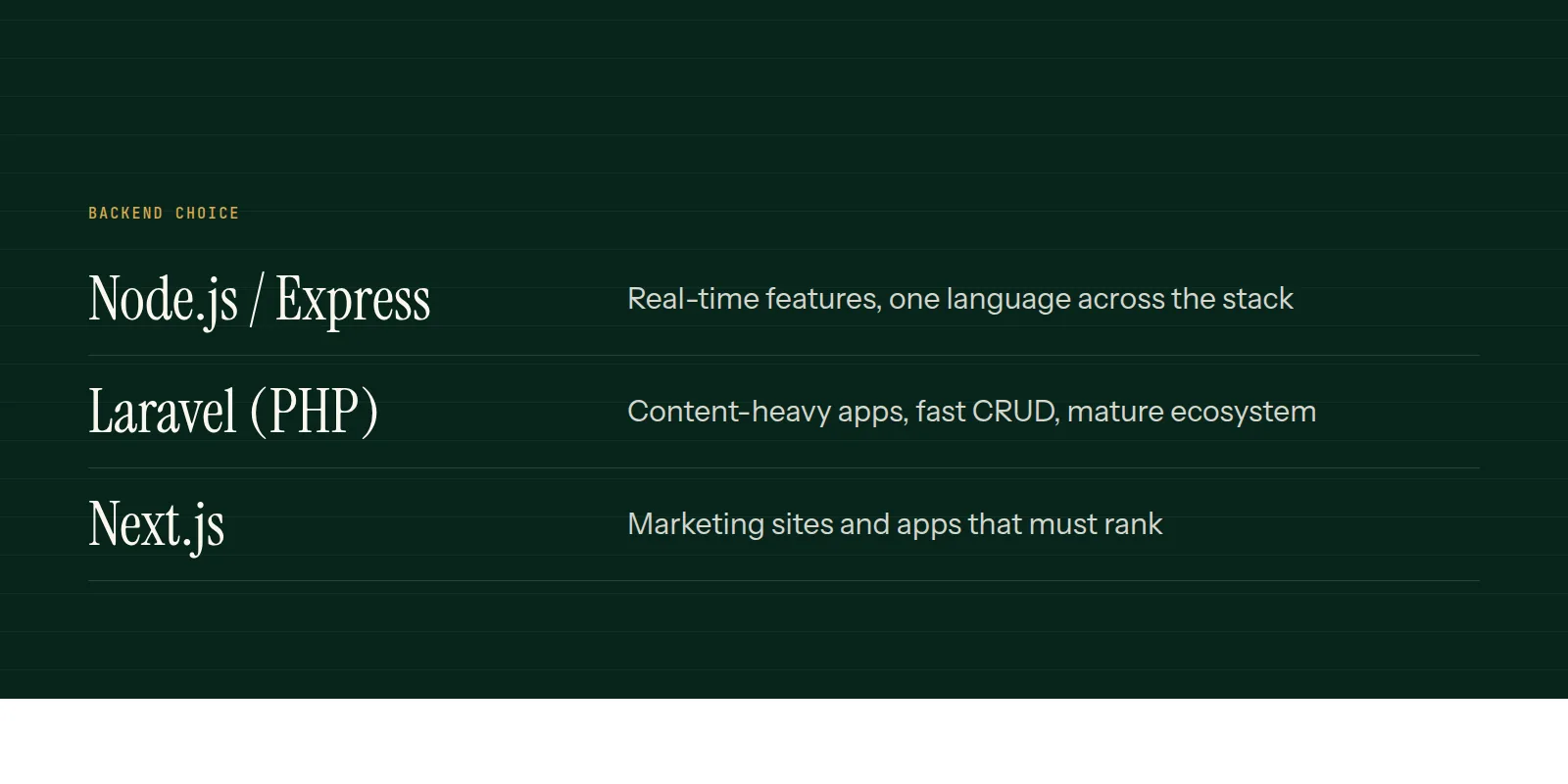
- The storefront your customers see is built separately, for example with Next.js or Shopify's Hydrogen, and talks to Shopify through its Storefront API. Shopify still runs the catalogue, orders and checkout.
- Is headless Shopify faster than a theme?
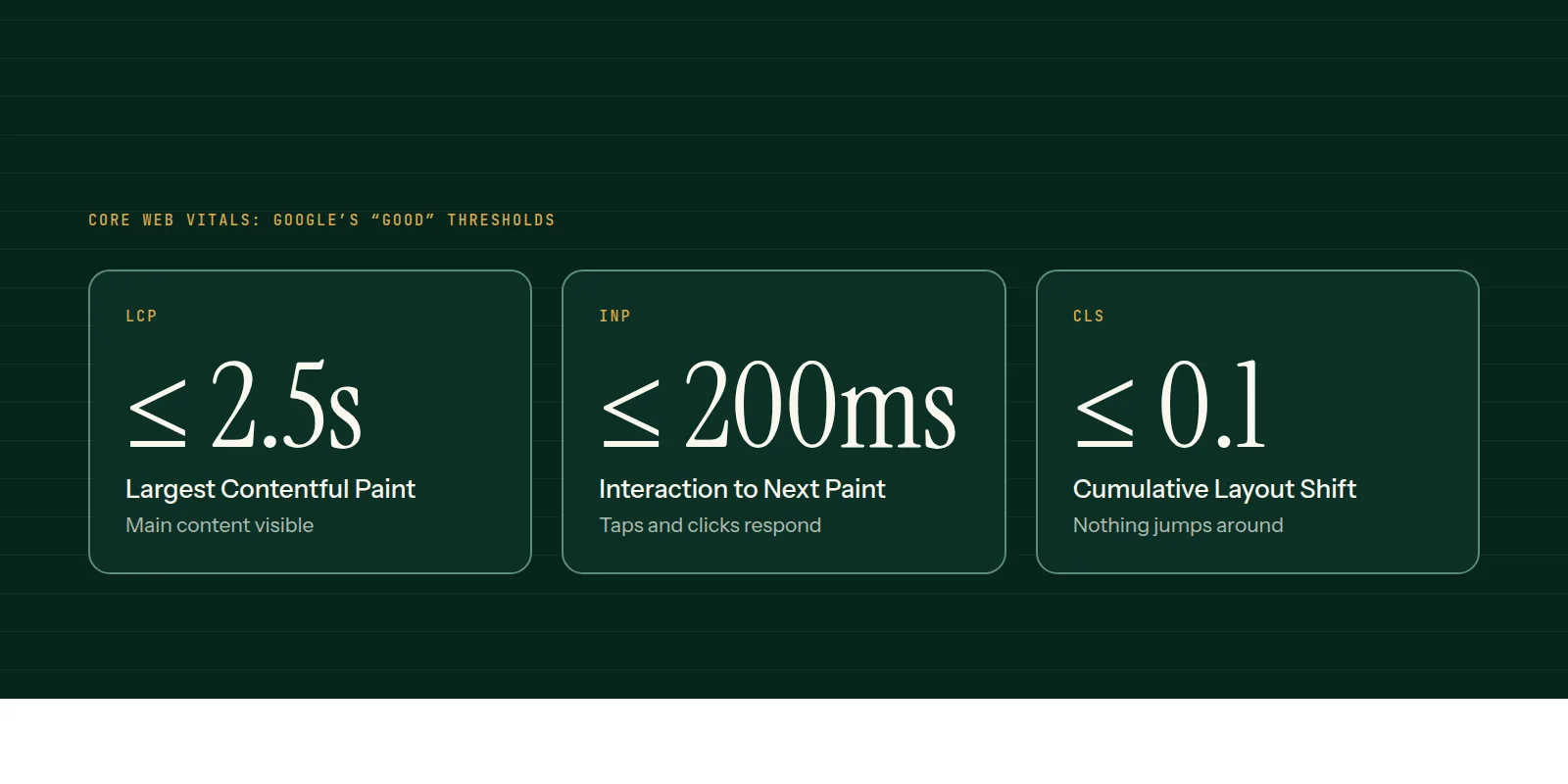
- It can be, because you control exactly what loads, but a well-built theme can also be fast. Speed comes from how the front end is built, not from the word headless.
- Do Shopify apps work on a headless store?
- Not all. Apps that inject code into themes will not appear on a custom front end, so check every app you depend on before deciding.
This is what we do
Work of this kind is E-commerce Development and Performance & SEO — the same hands that wrote this.
A guide from the team at RiverPoint Web & App. It describes how we would approach this and makes no measurement claims. If you want to talk it through, get in touch.